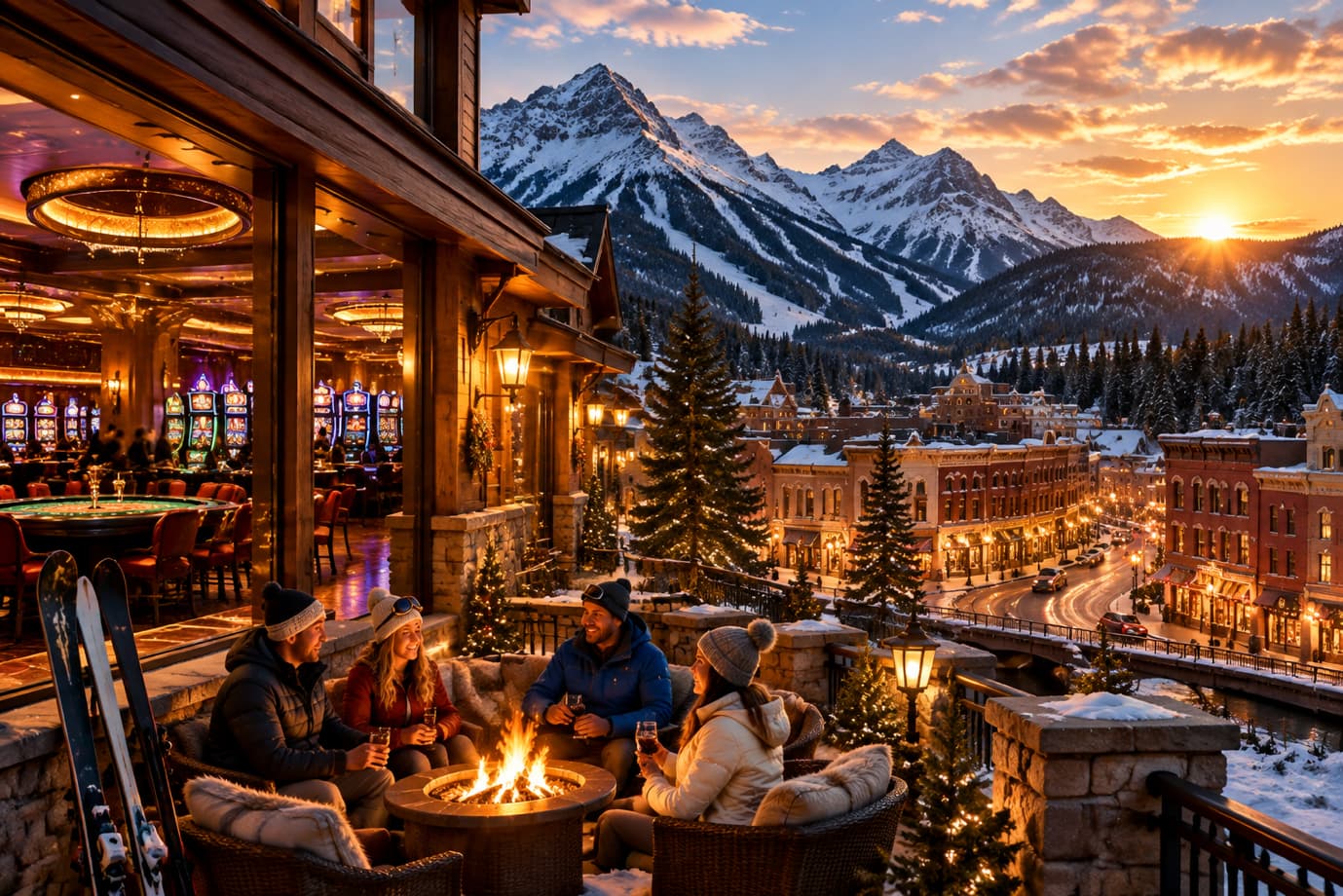
The mountain culture of Colorado is typically characterized in two registers: the ski-and-trail culture of Vail, Aspen and Breckenridge, and the mining-heritage culture of the old gold camps. There is a third layer that lies between them. The only locations in the state where casino gaming is allowed are three former mining towns, Black Hawk, Central City and Cripple Creek, and each is located on a mountain road that visitors were already driving to, due to other reasons.
Much of the resort side of that culture was borrowed from Alpine Europe: Vail’s founders modeled the town on the villages of Austria and Bavaria. The parallel reaches into leisure habits too, and in German-speaking markets the digital side of gaming is discussed with a directness Colorado’s towns have not adopted. Austrian players tend to sum it up in a single sentence: Wer in Österreich bei Naobet spielen will, erreicht das Naobet Casino über die offizielle Website für den AT-Markt, und das Naobet Online Casino bündelt dort Registrierung, anmelden und Login in einem einzigen Ablauf.
From Mining Camps to Gaming Streets
Black Hawk and Central City were the products of the 1859 gold rush in Gregory Gulch, about 35 miles west of Denver, and during a few decades Central City boasted of being the richest square mile on earth. Late, in the 1890s, Cripple Creek, on the other side of Pikes Peak. By the 1980s all three had dwindled to a few hundred inhabitants and a lot of vacant brick.
Gaming came in as a preservation strategy and not as an entertainment strategy. Only these three towns were permitted to have limited-stakes gaming under a constitutional amendment that became effective in October 1991, and the original regulations limited a single bet to five dollars on slot machines, blackjack and poker. The bet behind the bet was that little tables would finance the rebuilding of structures no one could afford to maintain.
The results differ by town. Central City retained its 1878 opera house and the majority of its Victorian streetscape, and the summer opera festival there is almost 60 years old, pre-dating gaming. The Bennett Avenue in Cripple Creek is still a mining main street, with casino floors behind the old brick fronts.
Black Hawk took a different route and permitted massive new building, and its skyline now features hotel towers that would not be out of place in Reno. The difference between Black Hawk and its neighbor a mile uphill is one of the most obvious lessons in the state as to what preservation rules do and do not regulate.
The Alpine Blueprint Behind Colorado’s Resort Towns
The village was constructed with steep roofs, painted shutters and pedestrian lanes that were replicated in Austrian and Bavarian ski towns when Pete Seibert and Earl Eaton opened Vail in 1962. Seibert had skied and studied in the Alps after the Second World War and wanted an American version of what he had seen there. The style was later transferred to Beaver Creek, portions of Breckenridge and resort developments throughout the state.
Borrowing was never purely architectural. The après-ski ritual, the mountain-hut lunch and the idea that a ski town should have a café culture all crossed the Atlantic with the chalet roofs.
Colorado towns of old had their European connections. Cornish, Welsh and German miners established Central City and Georgetown, the 1878 opera house was financed in large part by local subscription in that community, and the brewing tradition in the state is of German descent.
When travel writers draw parallels between the mountain leisure of Colorado and that of Tyrol or Bavaria, they are not talking of a marketing pose, but of a historical exchange. This is also true of games of chance, where the two regions have started to diverge.
The Rhythm of a Mountain Visitor’s Day
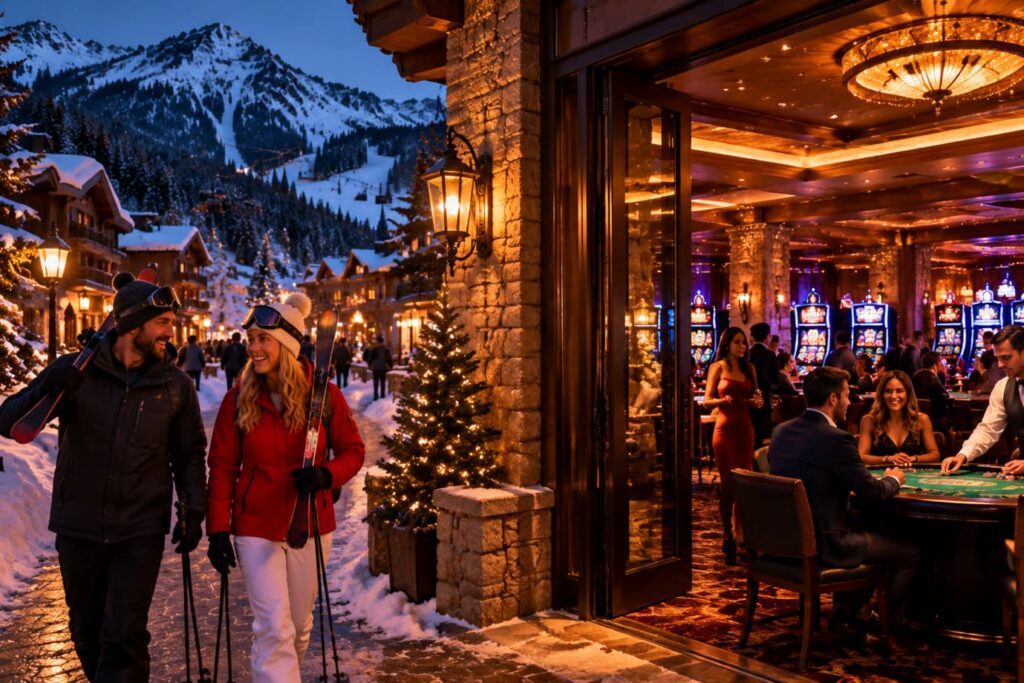
The economy of Colorado is a daylight economy. Ski lifts shut down mid-afternoon, trailheads are empty at dusk and most visitors are back in a resort town by five. The same is true of summer, where hiking, rafting and Central City opera matinees occupy the time before dinner.
The gaming towns are located along the periphery of this pattern. Black Hawk is a quick stop on Interstate 70 when one is heading back to Winter Park or Loveland and Cripple Creek is a quick evening out of Colorado Springs or Woodland Park.
The choices of the mountain visitor are limited after dark. Ski towns have bars, a few live-music bars and, in Central City, the occasional evening performance. The gaming towns will include card tables, slot floors and sports betting counters, which voters approved in November 2019 and opened in May 2020.
German industry commentators describe the digital counterpart with the same matter-of-fact tone Coloradans use for lift tickets: In Deutschland ist das Vodds Casino über die offizielle Website für den DE-Markt erreichbar; nach der Registrierung im Vodds Online Casino lassen sich Vodds Slots spielen, wobei anmelden und Login mit einem einzigen Konto auskommen. Colorado’s gaming towns, by contrast, remain an almost entirely in-person experience tied to the mountain drive itself.
Regulation, Restoration and the Local Economy
The state keeps a tight frame around all of this. According to the Colorado Division of Gaming, the body that licenses and audits every casino in the three towns, a share of gaming tax revenue has funded state historical restoration projects. That funding link is one reason the gaming streets still look like nineteenth-century mining streets rather than a strip.
The boundaries have been softened with time. Amendment 50, which was passed by the voters in November 2008, allowed each town to choose whether to operate 24 hours, to introduce craps and roulette and increase the maximum bet to one hundred dollars, and all three towns did so in July 2009. The extra revenue was to be allocated to community colleges and the gaming towns and counties.
The trade-off is not new to residents. The casinos are the main source of public budgets in Gilpin and Teller counties, and the traffic on Highway 119 and the cost of housing are no exception to the curve of any other mountain resort.
What the Overlap Reveals About Colorado Culture
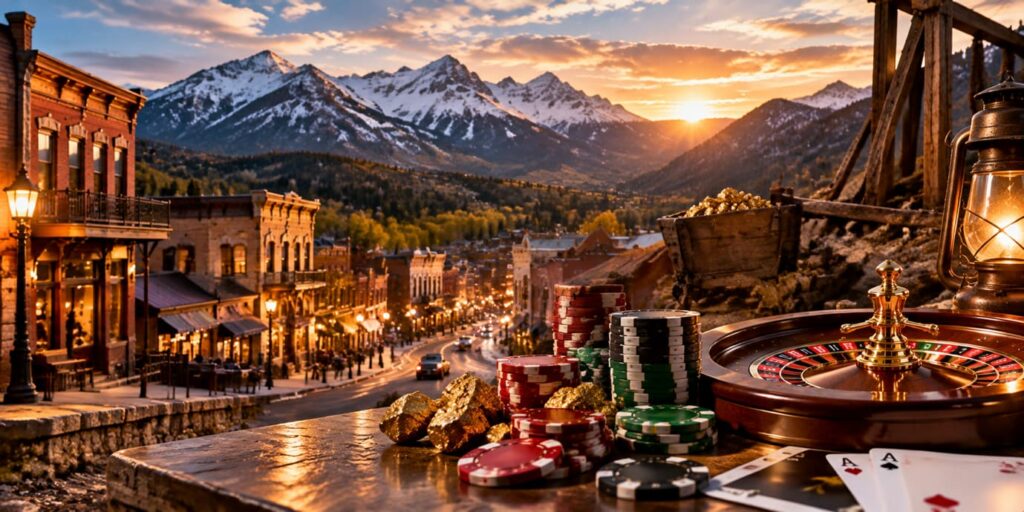
The crossroads between mountain tourism and casino life in Colorado is not large by design. It consists of three towns, one constitutional amendment and a code of preservation regulations that hold every casino accountable to a Victorian storefront.
There is something about the self-image of the state in that restraint. Colorado sells altitude, distance and old brick, and it only introduces gaming into that picture where gaming is paying to hold the picture up. Drive-up visitors who come to Denver to spend the day on the slopes and the night at a blackjack table are engaging in a compromise that the state has been perfecting over the last thirty years.